Anh ấy đang ngồi ở rìa vách đá .
他坐在悬崖的边缘。
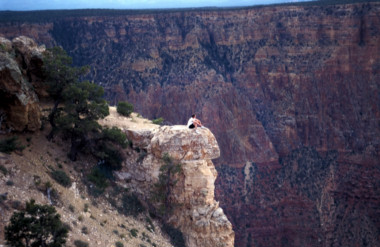
He is sitting at the edge of the cliff .
Er sitzt am Rand der Klippe.
Anh ấy đang ngồi ở rìa vách đá .
他 坐在 悬崖 的 边缘 。
Tā zuò zài xuányá de biānyuán.
(1970)
3174 巩固 gǒnggù (verb: to consolidate, to solidify) 复习可以帮助我们巩固已学的知识。
Fùxí kěyǐ bāngzhù wǒmen gǒnggù yǐ xué de zhīshi. Reviewing can help us consolidate the knowledge we have learned. Ôn lại có thể giúp chúng ta củng cố những gì chúng ta đã học được.
| 3415 尖端 jiānduān (adjective: most advanced, sophisticated, cutting-edge) 这款手机采用了尖端技术以及先进的设计理念。
Zhè kuǎn shǒujī cǎiyòng le jiānduān jìshù yǐjí xiānjìn de shèjì lǐniàn. This mobile phone has cutting-edge technology and advanced design concepts. Điện thoại này sử dụng công nghệ tiên tiến và các khái niệm thiết kế tiên tiến.
| 3416 见多识广 jiànduōshíguǎng (idiom: experienced and knowledgeable, have seen a great deal, have a wide range of experience) 我叔叔见多识广,关于这个问题,你可以向他讨教。
Wǒ shūshu jiànduō shìguǎng, guānyú zhège wèntí, nǐ kěyǐ xiàng tā tǎojiào. My uncle is experienced and knowledgeable, so regarding this problem, you can ask him for advice. Chú tôi rất am hiểu và bạn có thể xin ông lời khuyên về chủ đề này.
| 3555 开阔 kāikuò (verb: to widen, to open up) 旅游可以使人开阔眼界,增长见识。
Lǚyóu kěyǐ shǐ rén kāikuò yǎnjiè, zēngzhǎng jiànshi. Travel can broaden people's horizons and increase their knowledge. Du lịch có thể mở rộng tầm nhìn của con người và nâng cao kiến thức của họ.
| 3865 偏见 piānjiàn (noun: prejudice) 愚昧与无知是产生偏见的主要因素。
Yúmèi yǔ wúzhī shì chǎnshēng piānjiàn de zhǔyào yīnsù. Ignorance and lack of knowledge are the main factors that lead to prejudice. Sự thiếu hiểu biết và thiếu hiểu biết là những yếu tố chính tạo ra thành kiến.
| 3899 普及 pǔjí (verb: to popularize / to make universal / to be widely spread) 网络的普及让人们更容易获取各种信息和知识。
Wǎngluò de pǔjí ràng rénmen gèng róngyì huòqǔ gèzhǒng xìnxī hé zhīshi. The widespread use of the Internet has made it easier for people to access various information and knowledge. Sự phổ biến của Internet đã giúp mọi người tiếp cận dễ dàng hơn với mọi loại thông tin và kiến thức.
| 4163 视野 shìyě (noun: field of vision [or view]) 阅读能开阔我们的视野,让我们获得更多的知识和智慧。
Yuèdú néng kāikuò wǒmen de shìyě, ràng wǒmen huòdé gèng duō de zhīshi hé zhìhuì. Reading can broaden our horizons, enabling us to acquire more knowledge and wisdom. Đọc sách có thể mở rộng tầm nhìn của chúng ta và cho phép chúng ta có thêm kiến thức và trí tuệ.
| 4281 天文 tiānwén (noun: astronomy) 天文学家利用天文学知识和数据来解释和预测日食、月食等天文现象。
Tiānwénxuéjiā lìyòng tiānwénxué zhīshi hé shùjù lái jiěshì hé yùcè rìshí, yuèshí děng tiānwén xiànxiàng. Astronomers use their knowledge and data to explain and predict astronomical phenomena such as solar and lunar eclipses. Các nhà thiên văn học sử dụng kiến thức và dữ liệu thiên văn để giải thích và dự đoán các hiện tượng thiên văn như nhật thực và nguyệt thực.
| 4324 推翻 tuīfān (verb: to overthrow / to overturn) 科学研究需要不断地推翻先前的理论和观点,才能实现知识的进步和革新。
Kēxuéyánjiū xūyào bùduàn de tuīfān xiānqián de lǐlùn hé guāndiǎn, cái néng shíxiàn zhīshi de jìnbù hé géxīn. Scientific research requires constantly overthrowing previous theories and viewpoints in order to achieve progress and innovation in knowledge. Nghiên cứu khoa học cần không ngừng lật đổ các lý thuyết, quan điểm trước đây để đạt được sự tiến bộ, đổi mới về tri thức.
| 4708 愚昧 yúmèi (adjective: ignorant / uneducated) 教育可以消除愚昧和无知,使人们更加开明和理智。
Jiàoyù kěyǐ xiāochú yúmèi hé wúzhī, shǐ rénmen gèngjiā kāimíng hé lǐzhì. Education can eliminate ignorance and lack of knowledge, making people more enlightened and rational. Giáo dục có thể loại bỏ sự thiếu hiểu biết và làm cho con người trở nên sáng suốt và lý trí hơn.
| 4719 予以 yǔyǐ (verb: to give / to grant) 我们应该予以优秀员工更多的奖励,以表彰他们的努力。
Wǒmen yīnggāi yǔyǐ yōuxiù yuángōng gèng duō de jiǎnglì, yǐ biǎozhāng tāmen de nǔlì. We should give more rewards to outstanding employees to acknowledge their efforts. Chúng ta nên trao nhiều phần thưởng hơn cho những nhân viên xuất sắc để ghi nhận nỗ lực của họ.
|
|
|
 bờ
bờ  edge of a body of water
  edge of a table