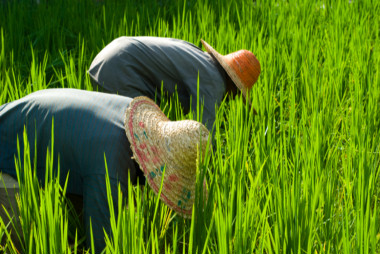
Những người nông dân đang thu hoạch mía .
农民正在收割甘蔗。

The farmers are harvesting the sugar cane .
Die Bauern ernten das Zuckerrohr.
Những người nông dân đang thu hoạch mía .
农民 正在 收割 甘蔗 。
Nóngmín zhèng zài shōugē gānzhe.
(3185)
2657 播种 bōzhǒng (verb: to sow seeds) 农夫们正在播种。
Nóngfū men zhèngzài bōzhǒng. The farmers are sowing the seeds. Nông dân đang gieo hạt.
| 3580 颗粒 kēlì (noun: anything small and roundish, grain [of rice, wheat, etc.]) 一连三个月没下雨,农民们颗粒无收。
Yīlián sān gè yuè méi xiàyǔ, nóngmín men kēlìwúshōu. It didn't rain for 3 months in a row and the farmers couldn't harvest any grain. Ba tháng trời không mưa, nông dân mất mùa.
| 4109 牲畜 shēngchù (noun: livestock / domesticated animals) 农民们养了许多牛、猪、羊等各种牲畜。
Nóngmín men yǎng le xǔduō niú, zhū, yáng děng gèzhǒng shēngchù. Farmers raise various types of livestock, such as cows, pigs, and sheep. Nông dân nuôi nhiều gia súc, lợn, cừu và các vật nuôi khác.
| 4193 书记 shūji (noun: secretary [in a political or organizational context]) 省委书记来到村里,听取了农民们的意见和建议。
Shěngwěi shūji láidào cūn lǐ, tīngqǔ le nóngmín men de yìjiàn hé jiànyì. The provincial party secretary came to the village and listened to the opinions and suggestions of the farmers. Bí thư tỉnh ủy đã đến thôn lắng nghe ý kiến, kiến nghị của nông dân.
| 4543 畜牧 xùmù (noun: animal husbandry) 畜牧业的发展对于提高当地经济水平和农民收入很重要。
Xùmùyè de fāzhǎn duìyú tígāo dāngdì jīngjì shuǐpíng hé nóngmín shōurù hěn zhòngyào. The development of animal husbandry is important for improving local economy and farmers' income. Việc phát triển chăn nuôi là quan trọng để nâng cao trình độ kinh tế địa phương và thu nhập của nông dân.
|
|
|